Thursday, March 3, 2016

The Face of the US Military (Part 1- Korea)

Every single conflict of the United States, from the War of Independence to the Civil War, and from WW1 to WW2, has had colored units and servicemen from all ethnic and racial backgrounds. It is the sad fact that these brave soldiers were often segregated, relegated, and ignored despite fighting just as well, if not better, than their Caucasian counterparts. The honored 54th Massachusetts that fought so bravely for the North in the Civil War did not earn a desegregated armed forces. The bravery of the 369th Infantry Regiment of WW1 did not convince the American people of the merits of colored soldiers.

Only after the outstanding heroism of massive numbers of minorities during WW2, the 92nd Infantry, the 442nd Infantry Regiment, the tens of thousands of Latino-Americans, and the thousands of Native Americans did a desegregated army truly begin to take hold. Finally, on July 26, 1948, President Truman passed Executive Order 9981 which stated that, "there shall be equality of treatment and opportunity for all persons in the armed forces without regard to race, color, religion, or national origin."1 The United States Navy and Air Force integrated within two years, but there was significantly more resistance in the army.
The Army is "not an instrument for social evolution... It follows that in the interest of efficient national defense, certain types of units should be entirely or largely confined to white troops" -Kenneth Royall, Secretary of the Army, 19492
Despite the obstructionist actions of much of the Southern wing of Congress as well as many U.S. Army generals, the executive order went through. The largest group that would be effected by this decree were African Americans who made up nearly 10% of the United States Army.3 The Army used quotas and racial discrimination to prevent the promotion of African Americans and to limit the amount of African Americans that fought in each unit. The Korean was the first test of this process of desegregation. With the failure of the 24th Infantry Unit to minimize its casualties, more and more inexperienced Caucasian officers and troops were being assigned to fill in roles they did not have the experience for. With a lack of any other options, US high command began to unofficially replenish the 24th Infantry with African Americans, who were often serving on garrison duty only. With no decrease in combat efficiency despite a desegregated unit, it was finally seen that African Americans were equally powerful soldiers who could fight just as well as anyone else. In 1951, the quota cap of the number of African Americans per unit was abolished. In 1954 the last segregated unit was desegregated and the entirety of the United States Armed Forces was no longer racially split.4

American soldiers of the U.S. Second Infantry, 19507

Despite all of this, heavy prejudices still floated around amongst the soldiers serving in the armed forces. There would often be two reactions from the soldiers to this process ranging from KKK sympathizers who fought against a desegregated military. The other group had often seen Blacks in combat alongside themselves and were in full support of a desegregated military because they no longer saw them as inferior soldiers.

The Korean War was also a test for all other groups of minority soldiers serving in the armed forces. The Japanese Americans who proved themselves in the 442nd just 6 years before in the mountains of Italy proved themselves once more in Korea. Thousands were sent over as translators and served in largely Asian-American units despite officially segregated units no longer existing. Native Americans provided the largest group as a percentage of their population in the United States. The Navajo communicators were crucial to an American victory and the fighting units saw the bravery of Native American soldiers. These soldiers knew that the United States was their home as well and would send large portions of their tribal members to enlist, and sometimes nearly 10% of their tribe would be sent overseas.5 Hispanics, particularly the Puerto Ricans in the 65th infantry, fought hard and were fully integrated into the US army in 1953. Latinos had been in integrated units in WW2, and had proven their fighting ability in both Europe and the Philippines.6 Asian Americans, Latino Americans, and native Americans all faced massive discrimination back home and proved their loyalty and dedication to the United States in yet another war.

Truman's executive order and the Korean War established the creation of a fully desegregated United States Armed Forces for the first time in the history of the United States military. Groups that proved themselves consistently in WW1, WW2, and the Korean War finally won the victories they were striving for. Though some minority groups, namely the Latino Americans, did not serve in segregated units, they still fought for racial equality in the armed forces. This new multi-racial force was not the first in the world, but it was the first the United States had ever had. It would be the armed forces the United States would eventually bring to Vietnam in the mid 1960's.

1. http://www.ourdocuments.gov/doc.php?flash=true&doc=84
2. The Double V: How Wars, Protest, and Harry Truman Desegregated America's Military
3. http://www.english.illinois.edu/maps/poets/s_z/stevens/africanamer.htm
4. http://www.history.army.mil/html/faq/diversity.html
5. http://www.shsu.edu/his_ncp/NAWWII.html
6. http://www.nps.gov/history/heritageinitiatives/latino/latinothemestudy/military.htm
7. Photo: https://upload.wikimedia.org/wikipedia/commons/0/07/Warkorea_American_Soldiers.jpg


Monday, February 29, 2016

Is Russia to blame?

When the Cold War started to reach it's peak, Cuba was armed by the soviets with their own nuclear weapons in order to have first strike capabilities.

 If you look at it from the point of view of the Americans, we wanted to protect our first strike advantage due to the fact that we had no intention of attacking Russia and wanted them to have no such ability. The Americans main interest is democracy and one of our government's goals is to have all nations be democratic yet if Cuba is allied with Russia as a communist state that is very scary for us. 
On the other side of the spectrum, Russia wanted to protect it's own national security as well because letting America have first strike opportunity was a dangerous thing even if at the moment they had no intention of attacking. By moving their missiles to Cuba they now also have first strike capabilities and in turn have the same advantage as America. This was a direct threat to democracy in America and possibly the whole western hemisphere.

Sunday, February 28, 2016

UNification - Intervention in the Korean War

The Korean War began on June 25, 1950, when the North Korean People's Army attacked across the 38th parallel set by the Soviets and the United States as the border between two Koreas. In defense of South Korea and to contain communism, the United States intervened.

Although South Korea was not a member state of the United Nations, sixteen states supplied direct military personnel, while the other five provided ambulances and other medical technology. The United States intervention fell under the umbrella of the UN intervention force, and it supplied up to 140,000 direct combat personnel at one time during the course of the conflict. The Soviet Union might have vetoed UN action with its position as a permanent member of the security council, but the Soviet representative Jacob Malik had begun boycotting the Security Council after failing to pass a referendum to expel Nationalist China from the UN. Thus, the Security Council passed a 9-0 condemnation of the war and led to "police action".

In actuality, much of the war was fought with US resources. Not only did it contribute the most manpower, but also provided air, naval, artillery, and military infrastructure for the other countries. In fact,
"nearly 90% of all army personnel, 93% of all air power and 86% of all naval power for the Korean War had come from America."
US General Douglas MacArthur assumed the commanding position for all combined forces.

Korea lay within the US's interests mainly due to the Soviet expansion of power from a successful atom bomb test and US efforts around the world of containment under the Truman Doctrine, which had recently suffered a major setback in Asia due to China's civil war.

Although immediately after the North Korean invasion, South Korean forces were pushed to the southeast to Pusan, UN forces did not concentrate in that area. Instead, on Sept 15 1950, they attacked and Inchon, a port city close to the capital of Seoul. Cut in two, the North Korean offensive was destroyed, and MacArthur chose to push into North Korea in order to reunify the Korean states. However, as the UN closed in on the Yalu River, the border between North Korea and China, Chinese forces attacked and forced a stalemate.

The UN's quick and decisive action in Korea can be contrasted with the League of Nations' inability to fix similar crises, like the occupation of the Ruhr region.

Sources
"Korean War," HISTORY, http://www.history.com/topics/korean-war
North Korea, "United Nations Forces in the Korean War," Australia's Involvement in the Korean War, http://korean-war.commemoration.gov.au/armed-forces-in-korea/united-nations-forces-in-the-korean-war.php
7-21-2015, "US Enters the Korean Conflict," National Archives, https://www.archives.gov/education/lessons/korean-conflict/
 "Soviets boycott United Nations Security Council," http://www.history.com/this-day-in-history/soviets-boycott-united-nations-security-council
History Learning Site, 5-26-2015, "The United Nations and the Korean War," http://www.historylearningsite.co.uk/modern-world-history-1918-to-1980/the-united-nations/the-united-nations-and-the-korean-war/
History Learning Site, 3-17-2015, "League of Nations Failures," http://www.historylearningsite.co.uk/modern-world-history-1918-to-1980/league-of-nations-failures/

Sunday, February 21, 2016

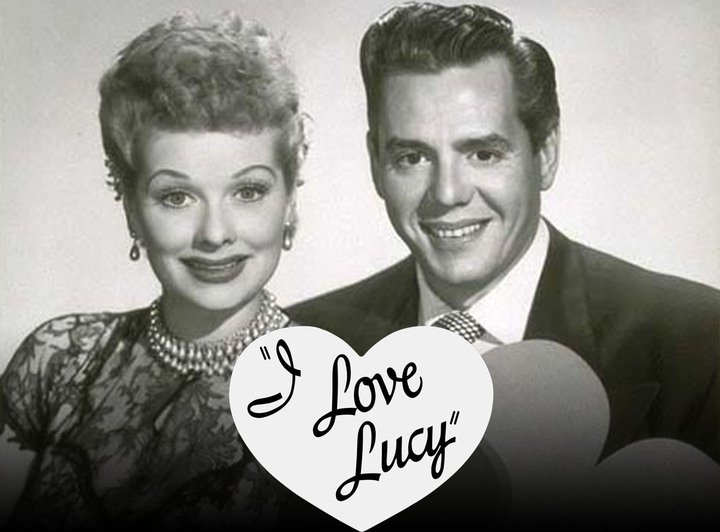
I Love Lucy

First shown on CBS in 1951, I Love Lucy was an instant phenomenon. Millions of households watched the show every week, and it is still widely known even to this day. As a comparison, when President Eisenhower gave his inaugural address, there were 29 million viewers, but when Lucy gave birth to Little Ricky, there were a staggering 44 million viewers watching.

In the 1950's, television was centered around the household, showing many scenes of marriage and domesticity. I Love Lucy conformed to that structure, by depicting the adventures of Lucy and her husband Ricky. However, I Love Lucy was revolutionary for its time in a number of ways.

Lucille Ball, the star of the show, was not only one of the first female comedic actors, she also co-owned its production company, Desilu, with her husband Desi Arnaz. The company was a catalyst for moving American TV production from New York to Hollywood. After her divorce with Arnaz, Ball bought him out of the company and became the first female head of a major production company. During her time as head, the Desilu produced Star Trek and Mission Impossible.

The relationships portrayed on the show were also ahead of their time. Ball had to fight CBS in order to get her husband on the show, due to the fact that the network was uncomfortable showing an interracial couple on television. Lucy is portrayed as a housewife who wants to be a star, but she goes about it with a comedic approach, so as to not offend the conservatives of the era with overtly feminist themes. Many women at the time sympathized with Lucy, because even though there were many more women in the workforce, they still continued to play the supporting roles to their husbands. The show also portrayed a strong female friendship between Lucy and Ethel, with many of their conversations passing the Bechdel Test.

I Love Lucy ran for six seasons, eventually ending in 1957. Ball would go on to star in The Lucy Show, and Here's Lucy, but neither were as big of hits as I Love Lucy. Ball passed away in 1989, mourned by an entire nation who had avidly watched every moment of Lucy and Ricky's marriage almost three decades ago.

Sources:
http://www.avclub.com/article/why-does-ii-love-lucy-iendure-after-all-these-year-72062
http://www.huffingtonpost.com/2015/04/26/lucille-ball-revolutionary_n_7138476.html
http://www.nytimes.com/2001/10/14/arts/television-radio-good-bad-lucy-legacy-laughs-coolly-confident-timelessly-funny.html?pagewanted=all
http://www.museum.tv/eotv/ilovelucy.htm


Thursday, February 18, 2016

One Last Time: A Comparison of Eisenhower and Washington

When Eisenhower stepped down as President in 1961, he warned the nation to keep a careful check on the "military-industrial complex" that had developed over the course of multiple wars. Even though Eisenhower believed that the United States needed to create a permanent armaments industry and a large military force, he was worried about the power the military had over the country. If the military continued to hold a large amount of influence over industry, that meant American policy would eventually be controlled by a "scientific-technological elite". The military would destroy the very ideals that it had sworn itself to protect.
American citizens were shocked at Eisenhower's warning, as he was the general who led the country to victory in World War II, and had witnessed significant points in the Cold War. They were surprised that Eisenhower was against the very organization that gave him his fame. Unfortunately, Eisenhower's warning went unheeded, due to the tensions of the Cold War. During the Laotian Civil War, President Kennedy introduced the strategy of "flexible response". The strategy called for developing an array of military weapons that could be used for any situation that may arise. This meant that Kennedy increased federal spending on conventional military forces.

Eisenhower's Farewell Address is similar to George Washington's Farewell Address in 1796. Washington brought up many important points in his Farewell Address, including American neutrality and the danger of political parties. Washington believed that political parties were willing to accomplish their goals at the detriment of the common good and the rights of the citizens. In the 1790s, the government was split into two parties: the Federalists, led by Alexander Hamilton, and the Democratic-Republicans, led by Thomas Jefferson. Washington was concerned that the political parties would distract the government from doing its job of governing the people and even eradicate the very freedoms it was founded upon. Just like Eisenhower, he believed that "a small but artful and enterprising minority" would "put in the place of the delegated will of the Nation, the will of a party". However, even his warning was not enough to stop the growth of the political parties.

Washington and Eisenhower were similar in many ways. Although they were born in different centuries, both led the country to victory as generals. Both saw the rise of a new era, whether it be the birth of a nation, or the start of the Cold War. Both Washington and Eisenhower were scared of the problems that would arise if the entire nation was put under the influence of a small group of people. Although most of us would like to blame today's problems on our predecessors for not listening to the parting words of the presidents, it is hard to determine how the course of history would have changed if we had listened to them.


Sources:
http://www.ushistory.org/us/17d.asp
http://www.heritage.org/initiatives/first-principles/primary-sources/washingtons-farewell-address
http://www.history.com/this-day-in-history/eisenhower-warns-of-the-military-industrial-complex
http://www.history.com/topics/us-presidents/dwight-d-eisenhower


Military industrial complex

In 1961, Eisenhower warned of what he called the military industrial complex, which is the industrial empires that profit from war (for anyone who has read George Orwell's 1984, the military industrial complex is a slightly less successful version of the authoritarian government of the novel). An example of this is if the Ford Motor company makes tanks for the US army. The government pays the company a great deal to satisfy orders from the military, which means that the company has an interest in the keeping the US in war, because the longer the war, the more tanks and therefore the more money Ford can make at the expense of the public purse. As the war drags on and the company receives more and more money, it can afford to lobby in Congress for the continuation of war and the provocation of future wars.

Eisenhower asked for future leaders to use a combination of military defense and diplomacy to avoid the creation of strong defense lobbyists. Essentially, Eisenhower knew that defense spending was necessary, but he also knew that if the American government continued on the way it had defense spending would become too significant a part in the economy.

One could say that the military industrial complex began to take control during World War 2. The reasoning behind this claim is that because FDR was so harsh on business during the Depression with his New Deal, he had to create a pro-business environment during the war. In doing so, FDR paved the way for the military industrial complex to control politics for the rest of the century. Harold Ickes, the head of the Department of the Interior under FDR critiqued Roosevelt's policies for war production, saying that the defense contractors were using public funds to make a guaranteed profit for themselves.

From our present situation we can see that political domination by the military industrial complex is not a laughing matter; in 2014, the US spent 610 billion dollars on defense. The amount the US spent was greater than the following 7 nations combined (the sum total of defense spending in 2014 for China, Russia, Saudi Arabia, France, UK, India and Germany was 600.6 billion USD to our 610). Clearly the phrase "nothing exceeds like excess" has not for a moment left the minds of American leadership.

I will be the first to tell you that ours is not a good position to be in. Our defense spending has decreased over the past few years, but in truth we are still feeling financial aches that are left over from the Cold War; the largest part of our defense budget is used for the maintenance of nuclear weapons and ballistic missiles, most of which were constructed as part of the nuclear arms race. The tricky thing going forward will be to decrease spending without damaging the economy. I say that this will be challenging because defense spending is such a large part of our economy that if we were to scale it back by a third, we would lose 1% of our GDP, which would be approximately 174 billion dollars that would no longer go into the economy. It is hard to say what the exact effect of such a withdrawal would be, but we can say that consumers would have trouble making up that sum in increased spending.

Effectively, the military industrial complex is dominant in our society, both politically and economically. We must find a way to diminish defense spending without causing an economic crisis, and the longer the status quo is upheld, the more difficult it will be to rid ourselves of the influence of the military industrial complex.

Sources:
history
statista
worldbank
marxists
britannica

Wednesday, February 17, 2016

The Suburban Boom and Materialism

A car, a dog, 2 kids, a house, and long-lasting peace were all things that anyone would dream of in the 1950s. But doesn't this sound all too familiar? The truth is, even in 2016, people are still pursuing the same things. Instead of a Cadillac, people now save up for a Tesla, and, well, the kids and dogs factor remains pretty much the same.

Returning home

After the Korean War and World War II, veterans were ready to return to peace. The GI Bill was passed to help veterans integrate themselves back into society. Not only did this apply to veterans, people at home who had suffered through the depression and war were ready to settle down. For many, settling down meant creating a family or reuniting with family. With these desires to settle down and create a family came the Baby Boom. The boom began in 1946, when 3.4 million babies were born and 4 million babies every year that followed in the 1950s. In total, there were about 77 million "baby boomers" by the end of the boom in 1964. 

Automobiles

Automobiles symbolized a new freedom, people not only could travel far from their home, they ventured out of the city and began planting their suburban life. For example, in 1948, Park Forest of Illinois was one of the largest suburbs, located 30 miles from downtown Chicago where jobs were abundant. For fathers, they were able to drive to work in the city and return home to a peaceful and quiet community. For women, the automobile gave them freedom to travel rather than stay at home during the day. 


Keeping Up With the Joneses

This idea of keeping up with the newest and finest products largely stemmed from the demand for suburban conformity. William Levitt built suburbs that were totally identical, from the number of bathrooms to 27 steps to building a house, everything was the same. Within a year, Levitt built 36 houses per day, all of which were completely identical, and therefore affordable. However, this conformity was also reflected on material goods such as televisions, cars, and furniture. For many families, seeing their neighbors hoard in new products meant having to upgrade themselves as well. This competitive nature can even be seen today where people become constantly obsessed with having to buy the newest model of the iPhone the second it comes out. 

Almost 70 years later, people are still pursuing the same things: a house, a family, some peace, a decent car, and the newest technology. To an extent, the pursuit of materialistic goods can be depressing and make people question the future of humanity. But is materialism all bad if what people are truly searching for is the idea behind it? The idea behind the automobile being freedom, the idea behind a house being peace, and perhaps the idea behind a dog...friendship? 


Sources:
http://www.history.com/topics/1950s
http://ushistory1950.weebly.com/the-growth-of-suburbs.html
http://www.ushistory.org/us/53b.asp
http://www.autolife.umd.umich.edu/Environment/E_Casestudy/E_casestudy12.htm
http://amhistory.si.edu/onthemove/exhibition/exhibition_15_2.html