Thursday, December 3, 2015

Al Capone


(https://en.wikipedia.org/wiki/Al_Capone#/media/File:Al_Capone_in_1930.jpg)

One of the most notorious gangsters in history, Al Capone was born in Brooklyn on January 17, 1899 to Italian immigrants. Many immigrants during that time were uneducated, but Capone was born into a respectable, well-educated family. Although they lived in a tenement in a bad part of town, the family was respectable and law-abiding, and there are few indications of Capone’s future as a gangster. Evidence points to his schooling as a major contributor to his character, as he went to a Catholic school that employed strict brutal discipline methods, and he never returned after being expelled at the age of fourteen.
Capone then met gangster Johnny Torrio, who would influence his future heavily. Torrio was one of the first to embrace a new style of organized crime: maintaining a respectable appearance while running a racketeering business under the surface. There would soon be a huge transition in America from the crude culture of the past to a seemingly refined lifestyle. Capone joined Torrio’s gang, which eventually became the Five Points Gang. He earned his nickname “Scarface” during these years when a young man slashed his face with a razor.
Torrio moved from New York to Chicago and eventually sent for Capone in 1919 to come join him in managing the brothel business there. Capone allegedly assassinated Torrio’s boss, allowing him to take over the business. By 1925, Torrio had retired, and Capone took over the business in Chicago, running gambling, prostitution, and bootlegging operations. Capone took a brief break from the business when he married Mae Coughlin and settled down, but after his father’s sudden death, he went back to his life of crime. Historians believe that the death of his parents and the resulting freedom from their influence was the reason he stopped trying to maintain a respectable image. As his reputation grew, Capone developed a routine: traveling unarmed, during nighttime, and always accompanied by at least two bodyguards. He and Torrio became business partners managing the Four Deuces, a speakeasy, gambling joint, and whorehouse, all in one.
Stricter racketeering policies in Chicago forced Capone to move operations into a suburb, Cicero, for his first job. His brothers joined him in infiltrating the police departments; by threatening voters and kidnapping his opponents’ election workers, he won the office. After a thug assaulted his friend, Capone tracked him down and murdered him, earning him a new notoriety from the publicity surrounding the case, even though he got away with it. He gained ownership of Torrio’s legacy after an assassination attempt forced him out of the business, and Capone moved his headquarters to a luxury hotel in an attempt to become more visible. Unlike most gangsters of the time, he attended operas and talked with the press, contributing to his image as a respected businessman in the community. Capone’s next job involved smuggling bootleg whiskey into Chicago. He grew rich off of this business, but he also suffered a setback when one of his minions accidentally shot prosecutor Billy McSwiggin. Capone was immediately blamed for the attack, and although he escaped arrest again, there was a public outcry against gangster violence, destroying his beneficent image.
The police failed in their investigations against Capone, but they were relentless, forcing him to go into hiding for three months. Eventually, he turned himself in to the Chicago police, but they did not have enough evidence to convict him of any crimes, and he escaped arrest once again. After that, he became a peacemaker of sorts, attempting to tone down gang violence and mediating a truce between two rival gangs. The peace was short-lived, however, and the Chicago gangsters returned to their old ways after a few months. During this time of turmoil between gangs, Capone was relaxing on Palm Island Estate in Florida with his family, and he evaded IRS agent Elmer Irey with cash transactions so the IRS could not track his income and spending in relation to his bootlegging business.
While in Florida, Capone was still managing his business in Chicago; during this time, he organized the St. Valentine’s Day Massacre, which remains one of the most well known in history. In an attempt to deal with a rival gangster, Bugs Moran, and his gang, Capone organized an ambush by his friend’s men. On Valentine’s Day, 1929, Moran’s gang were lured into a garage to purchase whiskey and then stopped by Capone’s men, disguised as police. After catching the bootleggers, the men opened fire and killed all but one of them, but Bugs Moran was nowhere to be found at the scene. Later, when investigating the case, the police knew that Capone had organized the massacre, even though he was not present in Chicago. The murders gained national publicity and ingrained an image of Capone as a ruthless and fearsome gangster, and the police increased their effort to catch him.
In March, 1929, Herbert Hoover remarked to his secretary of the Treasury, “Have you got this fellow Capone yet? I want that man in jail.” They worked with the US Prohibition Bureau and the IRS, and when it became clear that it would be difficult to convict him for prohibition violations, they focused on income tax evasion. In May, Capone was arrested for carrying a concealed weapon in Atlantic City while attending a “gangsters conference.” He was released just ten months later for good behavior, but was put on America’s Most Wanted list. Eventually, the IRS agent Elmer Irey successfully gathered enough evidence to try Capone in court, and another agent managed to expose his bootlegging violations.
In 1931, a jury met and determined that Capone was guilty of 22 counts of tax evasion and he and his gang were charged with 5,000 violations of the Volstead Act, enacted to carry out Prohibition. However, Capone’s lawyers managed to make a deal with the prosecutors, allowing him a lighter sentence in exchange for pleading guilty, and this enraged the people when word got out. His reputation destroyed and his “Robin Hood” image dismantled, Capone was found guilty and sentenced to eleven years in prison without bail and a total of $80,000 in fines and court fees. In 1934, he was moved to Alcatraz, where he was eventually released after six years for good behavior. He went back to his estate in Florida, where his health deteriorated and his wife stayed by his side until he died of a heart attack at age 48 in 1947.


Sources:


Wednesday, December 2, 2015

Carnegie Steel. Helpfull for the Steel industry or unhelpful?


Carnegie Steel undoubtedly moved the steel industry, and industirilization itself in the correct direction. However this brought me to wonder would industrilization have done better if Carnegie had, had less of precense in the Steel industry. 

The first argument one could make is that Carnegie steel was capable of providing very discounted prices because of how large they were. Most companies could not compete with the sales price of Carnegie Steel which left them two options, go out of business or put their company under the Carnegie trust. This meant that Carnegie Steel pretty much had a monopoly on the industry. Although the companies that were buying from Carnegie enjoyied the lower prices, they also hurt other industries. For example Carnegie would pay the railroads to not ship other companies products. Because of this the railroad lost customers. Carnegie payed a lot less to keep other companies off the railroad then the companies would have payed to be on the railroad. It may seem logical that the railroad should just blow off Carnegie and transport other companies steel, but beacuse Carnegie Steel was so big and powerfull they could not do this. 
Image result for carnegie steel

On the other hand it can be argued that Industrilization would not have moved as fast as it did with out Carnegie Steel Company. It bought many of the companies togeather which allowed them to all progress at the same speed and in the same way. Also the unison of the Steel companies opened more jobs. With more jobs comes more money which boosts the contries economy. Although more jobs were created the jobs also became less specialized which means that the people are more expendable. 

Did Carnegie Steel Company help of hurt the industry? 


http://www.pbs.org/wgbh/amex/carnegie/sfeature/mf_flames.html 
https://en.wikipedia.org/wiki/Carnegie_Steel_Company

How Music Affected the Great Depression

How Music Affected the Great Depression
The Stock Market crash of 1929 was one of the major factors that led to the biggest depression in United States history, the Great Depression. During the great depression 1/4 men and women were out of work, which caused thousands to wonder the landscapes of the States. 
The music business during this time was on the brink of collapsing. The American record companies of the day, who were previously selling more than 100 million copies of records a year during the "roaring 20’s” were only selling about 6 million copies. Most of these record companies went completely out of business because the rich were afraid to invest their money in anything and everybody else could not afford to invest their money in anything but keeping themselves and their family alive. “The Victor Company stopped making record players altogether for a time and sold radios-and radio programs-instead” (PBS). 
The fact that record players were not being sold and records themselves were not being sold means that millions of people in America and around the world, (because the entire world was affected by the American Great Depression) were not listening to music. Jazz was the music that attempted to bring back music for Americans, and it worked. Jazz represented American freedom to many which is the reason why it was looked towards to "lift the spirits and raise the moral of the frightened country” (PBS). Through raising the spirits and helping Americans feel some sort of happiness in this horrible time Jazz music also broke down many race separating barriers that had been put up since the beginning of the country. This was jazz’s highpoint in its carrier and it was never loved by this many people again.
After the 1929 Stock Market Crash and the first couple years to follow America was very slowly, rising. “1932 10 million records had been sold in the United States, by 1939, that number would grow to 50 million” (PBS). The sudden growth of record sales was thanks to a new kind of music that grew up in Harlem, New York, Swing. Swing music “became the defining music for an entire generation of Americans” (PBS). 
"Swing music Hollywood with its theme music and offered entertainment, elegance and escape for a people down on their luck” (PBS). Swing music offered hope to many Americans. People would travel from far and wide to see swing performers in Harlem, this time period known as the Harlem Renaissance. Swing music became the theme song for the famous “jitterbug” dance and many other exhilarating fast and fun dances. Swing music made bands, musicians, and music more popular in this time of bad luck in doubt for many Americans. “Young people followed the careers of the musicians who played in them[bands] just as they followed their favorite baseball players” (PBS). 
Music was a big part of the upcoming from the Great Depression and a major reason why many Americans got out of the initial funk. The Great Depression affected everybody around the world, except those completely isolate countries, in the worst way possible. Music was the one thing that brought everybody back together again and a major reason why the Great Depression did not go on forever. 

Kenneth C. Griffin

Kenneth C. Griffin
Kenneth C. Griffin is the richest man in Illinois, he founded and is currently the CEO of Citadel, a global investment firm. Griffin is the number 69 on the richest people in America list according to Forbes, his net worth as of 11/30/15 being 7 billion dollars. He is currently 47 years old and attained his wealth through hedge funds and his own self creation. 
Two years ago Griffen gave a speech at the Economic Club of Chicago dinner encouraging for a shift in the state’s balance of power. “The rich families remaking Illinois are among a small group around the country who have channeled their extraordinary wealth into political power, taking advantage of regulatory, legal and cultural shifts that have carved new paths for infusing money into campaigns” (NY Times). 

The changing of politics in Illinois through money is like the political bosses of the 19th century. A political boss was a man with a lot of money who controlled the people in political office with their abundance of money. The political boss system of the time was very anti-progressive because the progressives believed they could control too much of politics and had too much power. This system is like what is happening today in Illinois with Griffin and the rich attempting to grab the reigns of the political power structure. This can and will become a problem in Illinois because other states will start to see this and attempt, eventually it could even go nationally, which will only bring our country backwards. It will also put all the power in the hands of the rich, which would be another problem the United States cannot handle right now. 
http://www.nytimes.com/2015/11/30/us/politics/illinois-campaign-money-bruce-rauner.html?ref=todayspaper&_r=0
http://www.forbes.com/profile/ken-griffin/?list=forbes-400

Great Depression Heros

The Great Depression was one of America's most tragic moments. However, it was the beginning for a new age of Americanist ideals. The Great Depression began with the crashing of the Stock Market, but some believe it started naturally. Consumer goods dropped in value as well as different markets that were the effect of cheap prices and the cycle of unsold goods. The Stock Market bubble bursted by the beginning of 1930. As a result, people lost their jobs, family, lives, money and also their homes to the tragedy. More than 15 million people suffered. During this time, many so called "Heros" emerged from the crisis and were one of the best in their fields. Some examples of these "Heros" are Babe Ruth, Lewis Hine, Charlie Chaplin and others.

Babe Ruth~
 Babe Ruth, the one of the most infamous Baseball player during that time and all of history. Babe started playing in 1910's and played through 22 seasons. Babe Ruth was one of the best sports players at the time and was incredible. He could achieve things that normal people at the time could not achieve, he was a farther superior person than the regular American. His talent for the sport of baseball


Lewis Hine~
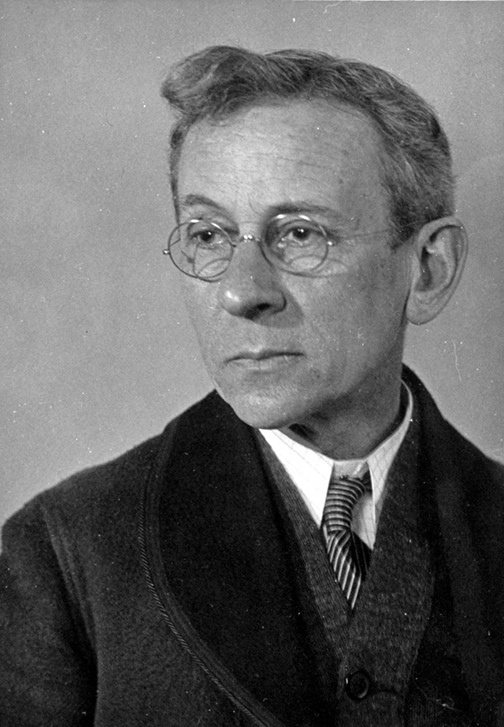
Lewis Hine, a photographer who captured the moments of the Great Depression with his camera. He was mostly known for his photographs depicting the cruel enduring labor from children and the stress that they are put on by child labor. His photographs were mostly used by the National Child Labor Committee as evidence of the cruel and unusal exercises of the work place for children. Lewis Hine was one of the first to use photocameras for documentary use. His documented works established the basis for the Committes to abolish child labor as well as other foundations that shed light on the issues of the Great Depression and the problems of society. He died early, but influenced a whole new generation and the later generations to fight against the problems of society and was a huge role model for the people of the US.


Charlie Chaplin ~
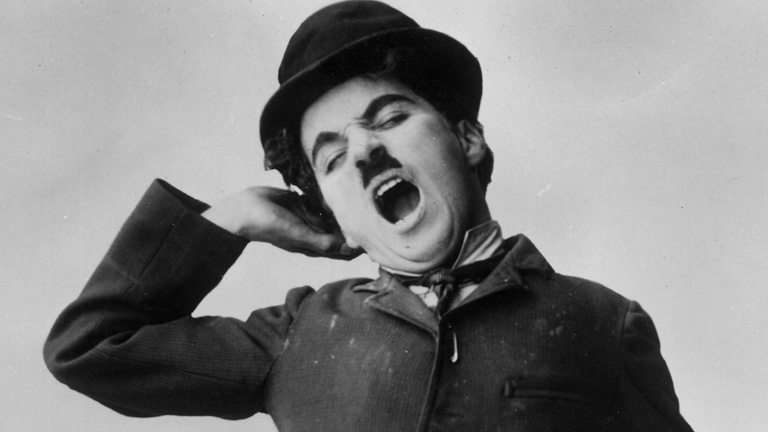
Charlie Chaplin famous for his works of silent films spread around the world in the 1900's. Charlie Chaplin rose to fame in the 1900's and worked on many influential films that portrayed the problems of society. His part as" the factory worker" showed most of the problems in the 1930's experienced by many people. His works are great historic films that can be watched by anyone. His silent comedies are what brought him fame throughout the decades.


These "Heros" were able to bring some light towards the experiences of the people and are still looked at today by all. Their works brought hope and enlightenment for change despite the recent tragedies of the Great Depression. This period was the start of an era of prosperity and changes socially and economically. These changes are still present today including most of Charlie Chaplin's films, Lewis Hine's photos as well as Babe Ruth's famous photos and cards.

The Dust Bowl of the 1930s

The Dust Bowl during the 1930s

The Great Depression of the 1930s brought catastrophe to many people in America, both workers and businessmen alike. It caused millions of Americans to lose jobs, and thousands of businesses to collapse in the shockwave of unemployment and debt. However, the industrial collapse was not the only calamity of this time. Another, equally as devastating tragedy that rocked the Americans of the 1930s was what many called the Dust Bowl.
The Dust Bowl was arguably one of the largest environmental disasters of America in its history, displacing 400 thousand people and making a vast desert out of 19 states. The danger behind this was not only the major unemployment that caused these millions of people to go out West as immigrant workers, but also caused the already depressed farming economy to suffer like never before. In terms of environmental science, the Dust Bowl was a caused by the overfarmed and nutrient depleted soil of the MidWest. After years of abuse of the soil, due to an industrialised farming system caused by the vast market provided by WW1, the MidWest had extremely loose, drifting soil. Drought also played a key part in this time, causing the soil to have absolutely nothing to anchor it. In the 1930s, winds started to pick up in the heartland of the US. Due to the overworked consistency of the land, the dry topsoil was lifted off of the land and turned into a massive storm. This storm of dust racked the farms of this area, covering towns and well-insulated houses inside and out with dust. There was no escape from the dust, and as such people started to flee to the West as immigrant workers.
The federal government did its best to assist the workers, with the Works Progress Administration giving close to 1 billion dollars in assistance, and naming the droughts during the 1930s to be the primary reason for federal aid. Moreover, 21% of rural families received federal emergency relief during this time. However, even with the federal aid there was not much that the families could do besides leave their dust covered houses and head to the farms of California to try and find work.
The Dust Bowl led to one of the largest migrations of its era, refugees pouring into the job markets of California and other Western states. Even though it was not all farm workers who looked for refuge in the West, those who were blue collar workers and even white collar were not given the focus that those who had lost acres of land had. This huge wave of refugees also created an increased pressure in the already struggling job market, leading to an increased amount of unemployment and causing those who originally had to compete for a job to have even less of a chance of getting out of their debt. Farmers who tried to start up a farm again were left the low quality land of the West, and due to the fact that they had lost practically everything in the dust storms, many were forced into a life of incredible debt. Subsequently the Dust Bowl of the 1930s did in fact play a significant role in the depression of the West, and the end of the prosperous industry of farming caused by WW1.

Sources:
http://faculty.washington.edu/gregoryj/dust%20bowl%20migration.htm

Tuesday, December 1, 2015

Rhapsody in Blue: A Profile

George Gershwin was one of the preeminent American composers of all time, creating a distinctly American sound that survives to this day. His work was representative of the 1920's, an era known fittingly as the Jazz Age for its newfound interest in this soulful genre of music. Here, we explore his life and how the changing culture of the 1920's affected the sound that we know so well to be his.

Gershwin was born Jacob Gershowitz on September 26, 1898, in Brooklyn, New York. He was the second of four children of Russian-Jewish immigrants. We can deduce that he most likely changed his name to sound more American, in order to have success in his musical career later in life. He began playing the piano at age 11, and his various mentors instantly recognized his musical genius, prompting him to drop out of high school at age 15 to play piano professionally in nightclub stints.


Around this time, he began developing as a composer as well as a pianist, publishing his first song in 1916. He collaborated with his brother, songwriter Ira Gershwin, in 1924 in the first of many works they created together. At this time, he was asked by a bandleader to write a jazz piece that would increase the public affinity for the genre. What emerged was perhaps his most well-known piece, "Rhapsody in Blue", which established him as a serious composer and has since become one of America's most endearing and loved pieces of music. It was premiered to mixed reviews from critics who were not quite sure where to place the jazz-influenced composer on the classical spectrum.

Like a piano concerto, the piece is written for solo piano with orchestra, but differs in that its form is that of a single extended movement instead of separate movements. Already, we see deviation from the traditional classical patterns that had been established and followed for so long. This emphasizes the idea that at this time, jazz was truly on the forefront of the new wave of music and culture. It was the epitome of change in that music was a form of art and was an integral part of the culture of the people; this culture is representative of the people as a whole, and connects them in so many ways. This is why the unique nature of jazz is so significant in context. This uniqueness can be seen in other ways as well; Rhapsody in Blue displays both rhythmic and tonal innovation, and has a very contemporary style. There are several instruments that were considered "vernacular" (PBS), such as the accordion and the banjo, which further distanced the piece from standard orchestral repertoire.

It has been described as "a musical kaleidoscope of America", and has been thought of as a musical portrait of New York City. It is fascinating that this piece of music, as recognizable as it is, is so representative of the very people that it comes from. It is ubiquitous in culture today, showing the lasting impacts of the Jazz Age on what defines the American sound. Gershwin's most famous work cemented his place as a prominent composer, and it influenced music as we know it in our everyday culture.

http://www.biography.com/people/george-gershwin-9309643
http://www.pbs.org/wnet/americanmasters/george-gershwin-about-the-composer/65/